
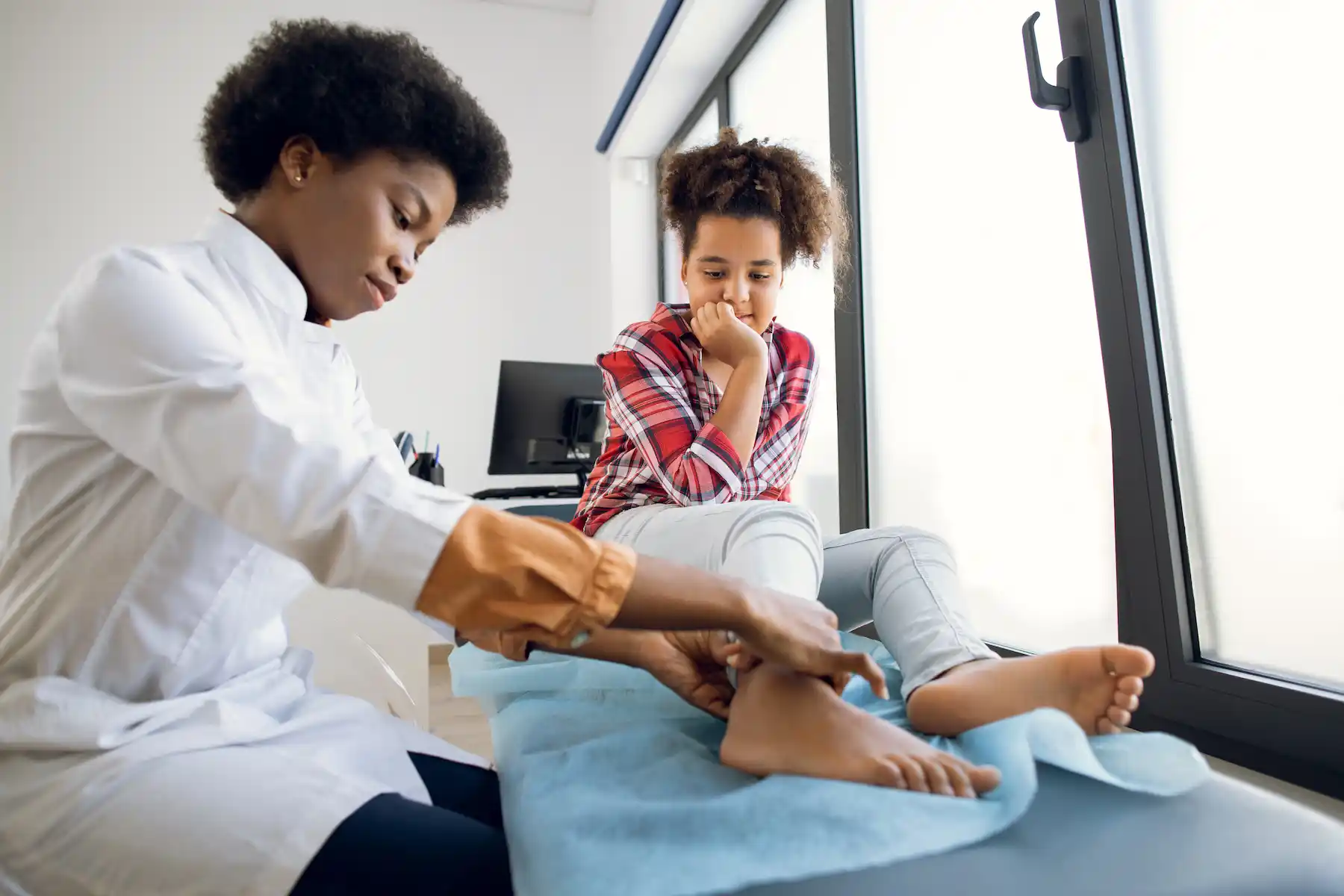
Flatfoot

Flatfoot can cause pain and affect your daily activities, making walking and standing uncomfortable. Our experienced podiatrists and orthopedic specialists at Synergy Health Partners provide comprehensive evaluation and personalized treatment options to restore your comfort and mobility.

Talk to Our Team

Schedule a consultation with our board-certified podiatrists to explore your treatment options and get back to the activities you love.
(947) 243-2604
Flatfoot

Understanding Flatfoot

Flatfoot (also called fallen arches) is a common condition where the arch of your foot collapses, causing the entire sole to come into contact with the ground. While some people are born with flat feet and experience no problems, others develop flatfoot later in life and may experience pain, swelling, and difficulty with walking or standing for long periods.

At Synergy Health Partners, our experienced podiatrists understand that flatfoot affects each patient differently. Whether you’re dealing with congenital flat feet or have developed this condition due to injury or age-related changes, we offer comprehensive treatment options to help reduce your pain and improve your mobility.

Many patients with flatfoot can find significant relief through conservative treatments, though some cases may benefit from surgical intervention. Our team will work with you to develop a personalized treatment plan that addresses your specific symptoms and lifestyle needs.


Common Symptoms

Flatfoot symptoms can vary significantly between patients. You may experience:

  • Foot and ankle pain, especially along the inside of your foot
  • Swelling along the inner ankle and arch
  • Pain that worsens with activity or prolonged standing
  • Difficulty walking on uneven surfaces
  • Leg fatigue or cramping after physical activity
  • Back, hip, or knee pain due to altered gait
  • Stiffness in one or both feet

Some people with flatfoot experience no symptoms at all, while others find that symptoms develop gradually over time or worsen with age.

Causes & Risk Factors

Congenital flatfoot occurs when the arches don’t develop properly during childhood. Acquired flatfoot can develop due to several factors:

Common causes include: posterior tibial tendon dysfunction (the most common cause in adults), arthritis, injury or trauma to the foot or ankle, diabetes, pregnancy, obesity, and aging. Certain activities that put repeated stress on the feet, such as running or dancing, may also contribute to flatfoot development.

Risk factors that increase your likelihood of developing flatfoot include being over age 40, having diabetes, obesity, high blood pressure, previous foot or ankle injuries, and participating in high-impact sports. Women are also more likely to develop posterior tibial tendon dysfunction, a leading cause of adult-acquired flatfoot.

Diagnosis

At Synergy Health Partners, our podiatrists use a comprehensive approach to diagnose flatfoot. Your evaluation will typically include a thorough physical examination where we assess your foot structure, flexibility, and areas of pain or tenderness.

We may also observe your footprint pattern and watch how you walk to understand how flatfoot affects your gait. Imaging studies such as X-rays help us evaluate bone structure and alignment, while MRI or ultrasound may be used to assess soft tissue damage, particularly to the posterior tibial tendon.

Our team may also perform specific tests to determine the flexibility of your flatfoot and assess the function of tendons and ligaments supporting your arch. This comprehensive evaluation helps us determine the best treatment approach for your specific condition.

When to See a Doctor

You should schedule an appointment with one of our podiatrists if you experience:

  • Persistent foot or ankle pain that doesn’t improve with rest
  • Swelling that lasts more than a few days
  • Difficulty walking or participating in normal activities
  • Changes in foot shape or arch height
  • Pain that interferes with sleep or daily activities

Early treatment is important because some causes of flatfoot, particularly posterior tibial tendon dysfunction, can worsen over time without proper care. Our team can help prevent progression and provide relief from your symptoms.

Why Synergy Health for Flatfoot Care?

Our comprehensive approach combines advanced diagnostics with personalized treatment plans to address your specific flatfoot symptoms and restore your mobility.
  • Board-certified podiatrists with extensive flatfoot treatment experience
  • Advanced imaging and diagnostic capabilities on-site
  • Comprehensive treatment options from conservative care to surgery
  • Integrated physical therapy and rehabilitation services

Treatment Options

Star icon

Our specialists offer both non-surgical treatments like custom orthotics and physical therapy, as well as advanced surgical options when conservative care isn't enough.

Non-Surgical Care

Non-Surgical Foot & Ankle Treatments

View All Non-Surgical

YOUR PATH TO BETTER FOOT HEALTH

Why Choose Synergy?

Our integrated team approach ensures you receive coordinated care from diagnosis through recovery, all under one roof in Southeast Michigan.
0 %

Patient satisfaction with flatfoot treatment outcomes

(1 Year)

0 %

Patients avoid surgery with conservative treatment

(6 Months)

0 %

Return to normal activities after treatment

(3 Months)

Data Source: CODE Technology PRO Surveys (2025).